In the investor Q&A, Zhongji Innolight introduced the company's core information such as operating performance, business progress and future development plans in 2025, and clarified the company's development trend and core layout direction in the optical module market.
In terms of performance, the company's net profit attributable to the parent company in 2025 will be 98-11.8 billion yuan, a year-on-year increase of 89.50%-128.17%; the range of non-net profit was 97-11.7 billion yuan, a year-on-year increase of 91.38%-130.84%, and the overall growth was substantial. On a quarterly basis, revenue in each quarter in 2025 will show a stable month-on-month growth trend, highlighting the gradual increase in shipment scale; At the same time, gross profit margin also showed a month-on-month improvement trend, mainly due to the joint promotion of multiple factors such as the increase in the proportion of high-end products and the increase in the proportion of silicon photonics.
On the cost side, the amount of expenses in the fourth quarter of 2025 increased month-on-month, mainly affected by factors such as material handling and counterparty settlement fees. Among them, R&D expenses increased rapidly, and the core reasons were the cost provision at the end of the year, material inventory and cleanup, etc.; Finance costs also achieved rapid growth, mainly affected by exchange losses.
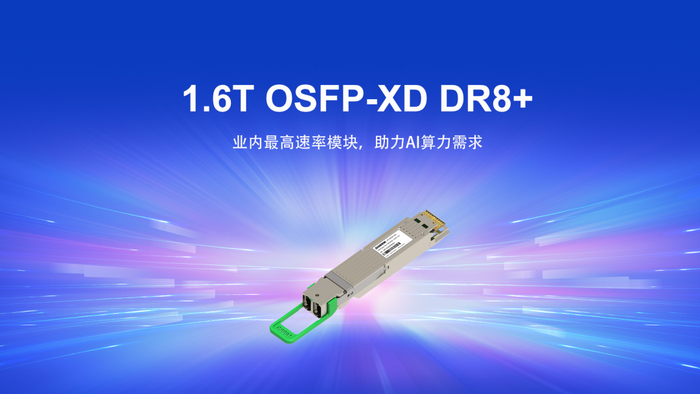
In terms of specific business progress, the demand and orders of the company's key customers will maintain rapid growth in the fourth quarter of 2025, and the shipments of main products such as 800G will continue to rise month-on-month. It is worth noting that 1.6T products will be officially shipped to key customers in the third quarter of 2025, and the speed of volume in the fourth quarter will be further accelerated, marking the company's official opening of the era of 1.6T product volume. At the same time, the proportion of silicon photonics products continued to increase in the fourth quarter, of which the proportion of 800G silicon photonics shipments further increased, and the proportion of 1.6T silicon optics was higher than that of 800G silicon optics, which played a significant role in driving the improvement of gross profit margin in the current period.
In terms of supply chain, the supply of some materials in the fourth quarter of 2025 will be tight, and the core reason is that customer demand is increasing too quickly, and the capacity supply of key materials such as optical chips cannot match the growth rate of demand in a timely manner, which has a certain impact on the company's production and shipment links. From the perspective of the order cycle, many customer orders have been placed until the fourth quarter of 2026, fully reflecting the high prosperity and sustainability of industry demand.
On the product demand side, as key customers start the deployment of 1.6T products this year, it is expected that the demand for 1.6T products this year will increase significantly compared with 2025. From the perspective of orders, 1.6T orders grew rapidly in the first quarter of this year and are expected to maintain a month-on-month growth trend. In addition, more customers will enter the 1.6T product verification stage this year, and it is expected that 1.6T will become a more mainstream demand category for CSP customers in 2027.
In terms of core material supply, since 2025, due to the rapid increase in customer demand, the overall supply of upstream core materials has been tight, which has not fully matched the growth rate of demand. Among them, optical chips such as EML and CW are relatively in short supply due to the long production cycle, and it is expected that the tight supply situation will continue in the first half of this year, and the supply situation will not be alleviated to a certain extent until the second half of the year. In this regard, the company attaches great importance to the preparation of raw material procurement, and has agreed with suppliers on the overall supply plan for this year and next year, locking in the corresponding production capacity, and the supply of core materials will be effectively guaranteed to support the continuous growth of the company's shipment scale. In response to the tight supply of optical chips, the company said that the core reason is that the number of high-end optical chip suppliers is small, the production cycle is longer, and the growth rate of production capacity lags behind the growth of demand. With the gradual increase in the proportion of silicon optical products, the company will continue to expand the supply capacity of CW light sources and alleviate the tight supply pressure of optical chips by introducing more suppliers, relying on market share and order scale advantages to cooperate with manufacturers with large-scale production capacity, and locking in long-term production capacity.
In terms of silicon photonics technology penetration, the company has established the ability to ship silicon photonics products since 2024, and the volume of 800G and 1.6T silicon photonics products will continue to increase in 2025, further verifying the company's silicon optoelectronics technology strength and gaining customer recognition. In the future, it is expected that the proportion of silicon optics in 800G and 1.6T products will continue to increase; At the same time, silicon light has good application prospects in cabinet scenarios, and the company will further give full play to the advantages of silicon optical technology and give priority to the use of silicon optical technology to carry out product development.
In terms of technical solution layout, the company believes that the pluggable optical module technology is currently very mature, and this year's 800G and 1.6T pluggable optical modules will achieve large-scale increases, and 1.6T pluggable optical modules will still be the mainstream demand in the market in 2027. It is expected that the 3.2T pluggable solution will still be the mainstream solution recognized by customers in scale-out scenarios, and is expected to achieve continuous iteration and large-scale deployment. In addition, NPO, as a new technical solution, has multiple advantages over CPO, including optical engine pluggable capabilities, mature PCB packaging technology, large-scale mass production capabilities, more open supply chain ecology and lower costs, etc., and has become a technical solution favored and valued by CSP customers, and is expected to become a long-term technical choice in the industry in the future.