I. Client Background
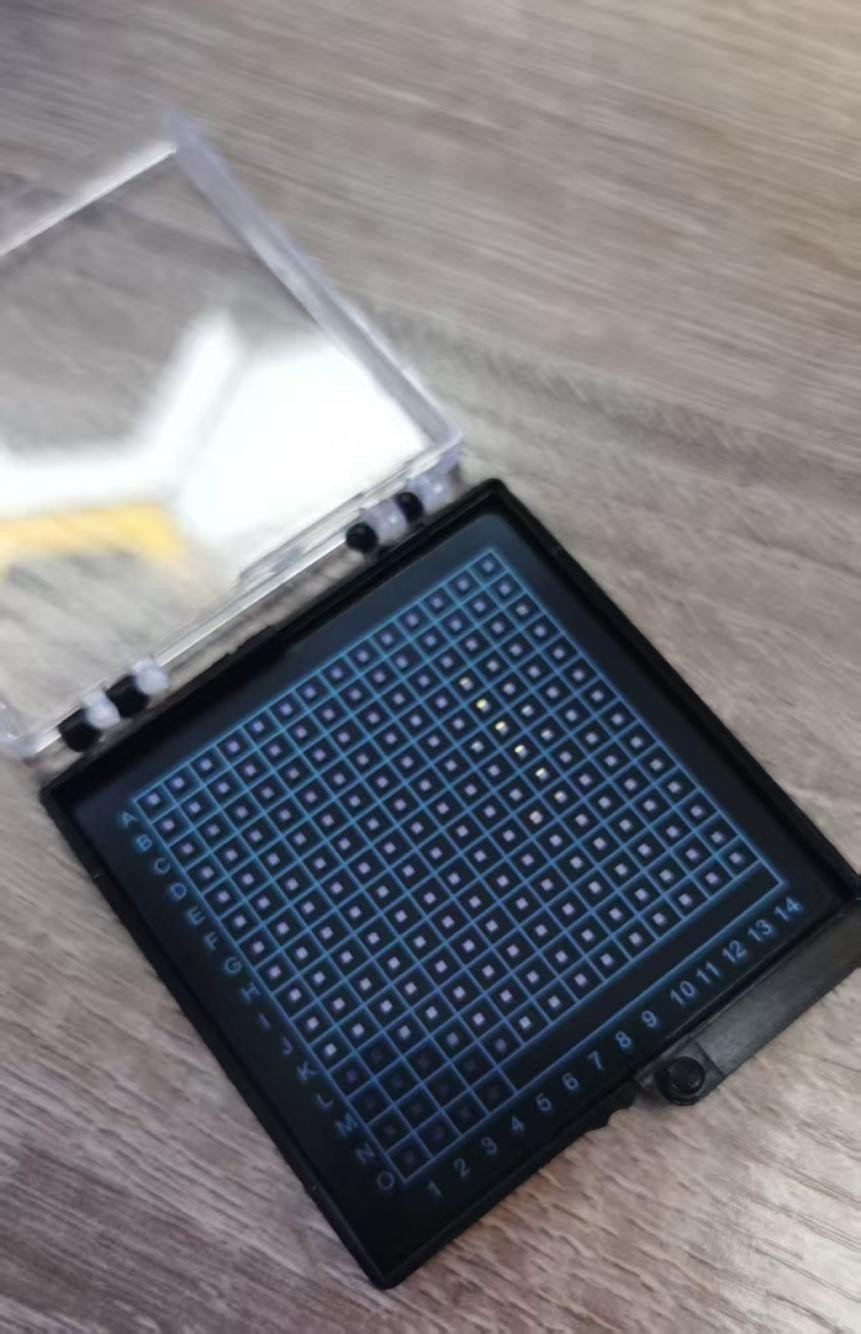
The customer specializes in providing filters for 10G/25G/100G/200G/400G/800G data communication and telecommunications optical module manufacturers.
With the development of optical modules towards higher speeds (800G/1.6T) and miniaturization, the Filter, as a core passive component of optical modules, has its performance stability directly determining the transmission efficiency and anti-interference capability of the modules. The customer's original Filter testing model faces multiple bottlenecks, severely impacting overall production progress and product competitiveness:
(1) Low Testing Efficiency: The manual testing mode takes up to 45 seconds per Filter, with a daily output of only 1,500pcs per station, failing to match the mass production pace of optical modules and creating a bottleneck in production capacity;
(2) Insufficient Testing Accuracy: Manual operations are susceptible to positioning deviations and parameter setting errors, resulting in test deviations ≥0.1dB for core parameters such as Filter insertion loss, isolation, and center wavelength. The test pass rate is only 88.5%, allowing a large number of defective products to flow into subsequent processes and increasing rework costs;
(3) High Labor Costs: Each test line requires 50 test personnel responsible for loading, testing, sorting, and data recording, with labor costs accounting for 32%. Frequent staff turnover also leads to inconsistent testing standards;
(4) Difficulties in Data Traceability: Manual recording of test data is prone to omissions and errors, making it impossible to achieve full-process data traceability for individual Filters, which fails to meet customer quality control and downstream manufacturer audit requirements;
II. Core Requirements and Challenges
(I) Core Requirements
The customer urgently requires a fully automated Filter testing production line to achieve unmanned operation throughout the entire process of Filters for optical modules, from automatic feeding, precise testing, intelligent sorting to data traceability. The core needs focus on:
(1) Efficiency Enhancement: Shorten testing cycle time, single Filter test duration ≤5 seconds, daily testing capacity per station approximately 20,000pcs, matching optical module mass production progress;
(2) Precision Upgrade: Testing deviation ≤0.02dB, test pass rate increased to above 98%, reducing rework costs;
(3) Cost Reduction and Efficiency Improvement: Reduce manual labor input, with ≤2 workers per production line, lowering labor costs;
(4) Intelligent Traceability: Achieve real-time collection, storage, and query of test data, supporting full-process traceability for individual Filters.
(5) Flexible Compatibility: Adapt to Filters of various specifications and parameters required for 10G-800G optical modules, supporting rapid model switching to enhance equipment reuse rate.
(2) Core Challenges
(1) Precision Challenge: The testing accuracy requirements for core Filter parameters (insertion loss, isolation, center wavelength) are extremely high, necessitating solutions for positioning deviations and signal interference to ensure test data stability;
(2) Compatibility Challenge: Different Filter models vary greatly in size, interfaces, and testing parameters, requiring the design of flexible fixtures and switchable testing solutions to achieve multi-model compatibility;
(3) Integration Challenge: Seamlessly integrate modules such as automatic feeding, precise testing, intelligent sorting, data collection, and MES interfacing to ensure smooth operation of the entire line with low failure rates;
(4) Efficiency Challenge: While improving accuracy, significantly reduce testing cycle time to balance precision and efficiency, meeting mass production requirements.
III. Solutions
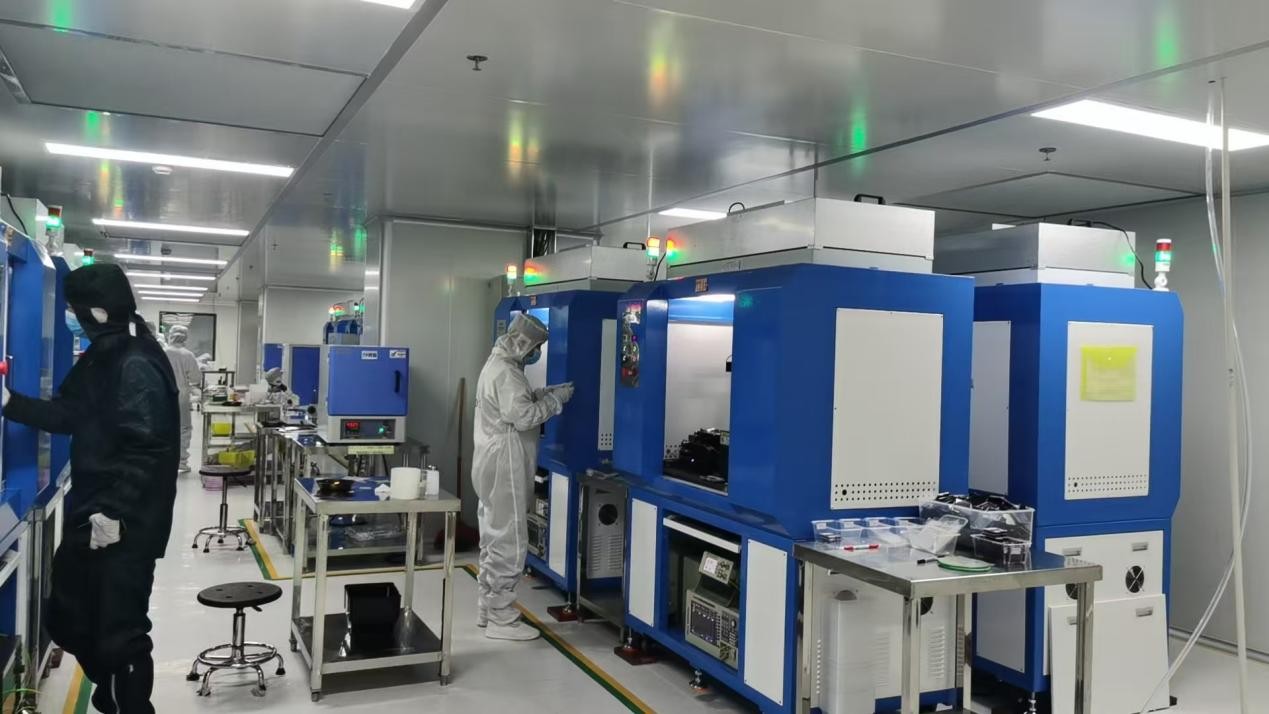
Addressing customer pain points and demands, Harley Automation has designed a tailor-made fully automated test production line for optical module filters. Centered on "high precision, high efficiency, high compatibility, and intelligence," the solution integrates automatic feeding systems, precision testing systems, intelligent sorting systems, and data management systems. It achieves unmanned, standardized, and traceable filter testing throughout the entire process. The specific solution is as follows:
(I) Core Equipment and System Configuration
(1) Feeding System: The wafer expansion ring feeding system enables batch loading of Filters, automatically identifying their orientation and placement position with a feeding accuracy of ±0.02mm. This eliminates manual feeding deviations and enhances feeding efficiency.
(2) Precision Filter Testing System (Core Equipment): Equipped with a high-precision spectral analyzer, broadband light source, low-noise signal acquisition module, and CCD precise positioning. It can accurately test core parameters such as Filter insertion loss, isolation, center wavelength, and bandwidth, with a testing accuracy of ±0.02dB and a testing cycle of ≤5 seconds/PCS. It supports multi-parameter synchronous testing without manual intervention.
(3) Intelligent Sorting System: Automatically sorts qualified and unqualified products based on test data, with unqualified products categorized and stored by defect type. The sorting accuracy is 100%, and the sorting cycle is synchronized with the testing cycle to avoid human sorting errors.
(4) Data Management & MES Integration System: Real-time collection of test data for each Filter (parameter values, test time, operator, equipment status) with storage duration ≥3 years, supporting data query, export, and traceability. Seamless integration with customer MES systems enables interconnection between test data and production data, facilitating comprehensive quality control throughout the customer's workflow;
(5) Flexible Fixture and Switching System: Equipped with quick-change flexible fixtures compatible with Filters of various sizes and models (covering the full range from 10G to 800G). Model switching time ≤5 minutes without device recalibration, improving equipment utilization rate.
(2) Core Technology Highlights
(1) High-Precision Positioning Technology: Utilizes CCD visual calibration positioning with a positioning accuracy of ±0.005mm, solving manual positioning deviations, ensuring precise alignment between test probes and filters, and enhancing test accuracy;
(2) Intelligent Optimization Algorithm: Self-developed filter algorithm that automatically calibrates test parameters, identifies test anomalies, and adjusts test status in real-time, reducing test errors and improving test data stability;
(3) Flexible Production Design: Supports compatibility testing for multiple filter models, enables quick switching of production tasks, and adapts to customers' multi-specification, multi-batch production needs, reducing equipment investment costs.
IV. Implementation Process
To ensure smooth production line deployment and rapid commissioning, Halley Automation assembles a dedicated implementation team, collaborating closely with the client's process, quality, and production departments. The implementation is divided into 4 phases, with progress and quality controlled throughout the entire process:
(1) Requirement Research and Solution Optimization (2 weeks): Conduct in-depth research at the client's production workshop, investigate Filter testing processes, existing pain points, production capacity needs, and MES system interface standards. Combine client product specifications to optimize testing solutions and equipment configurations, clarifying implementation milestones and acceptance criteria;
(2) Equipment R&D and Production (5 weeks): Based on the customized solution, develop core testing equipment and supporting systems, produce flexible fixtures and other components, strictly adhere to quality control standards to ensure equipment performance meets requirements;
(3) On-site Installation, Debugging, and Trial Production (2 weeks): Dispatch an engineer team to the site to complete production line equipment installation, wiring, and debugging, interface with the customer's MES system, conduct small-batch trial production, optimize test parameters and production line cycle times, and resolve issues arising during trial production;
(4) Training, Mass Production Delivery, and After-sales Support (1 week): Provide equipment operation, routine maintenance, and troubleshooting training for customer operators and maintenance personnel; assist customers in achieving mass production, monitor production line operation status, offer 7×24 technical support, lifelong maintenance, and regular on-site inspections to ensure stable production line operation.

V. Implementation Results
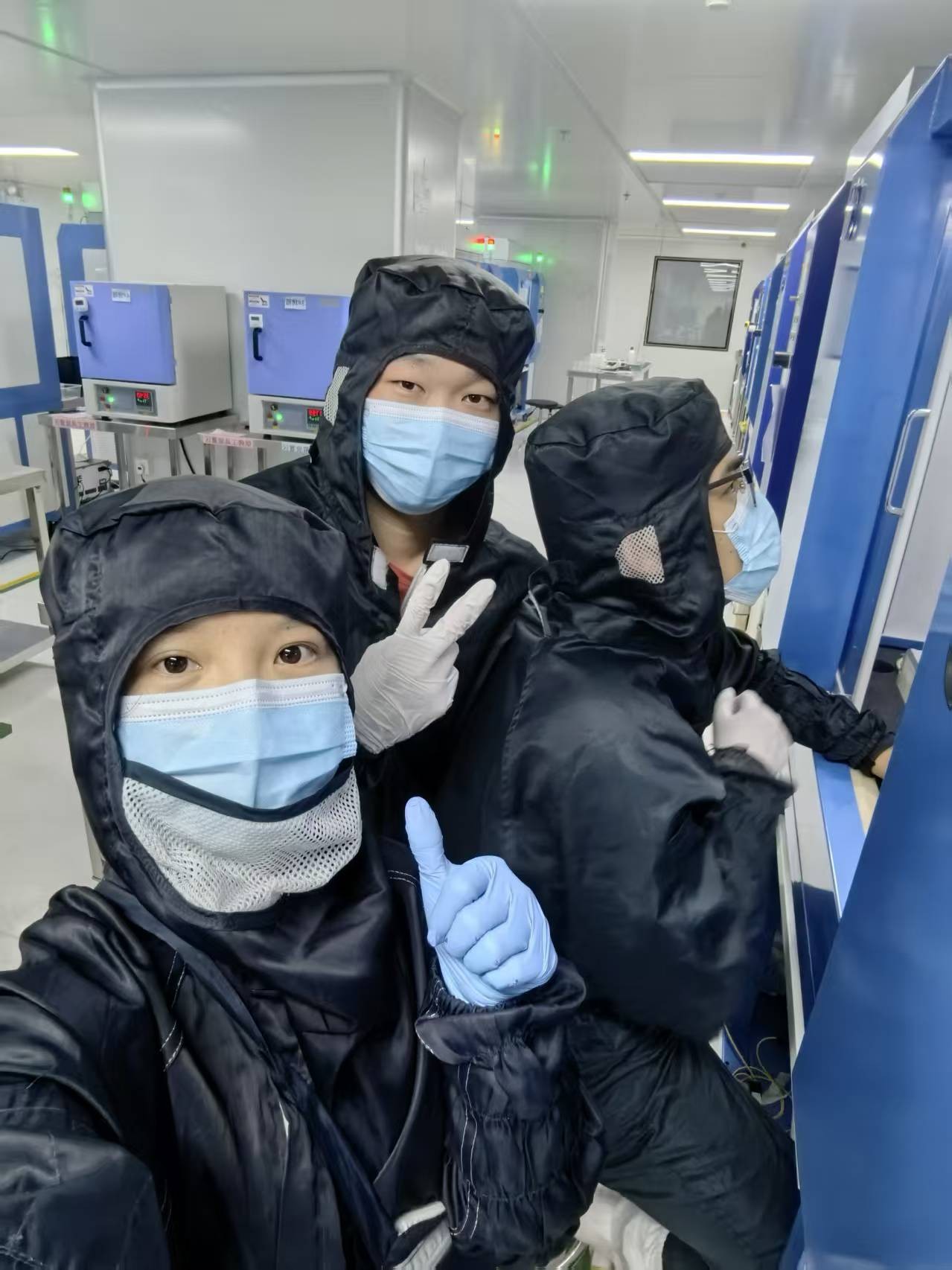
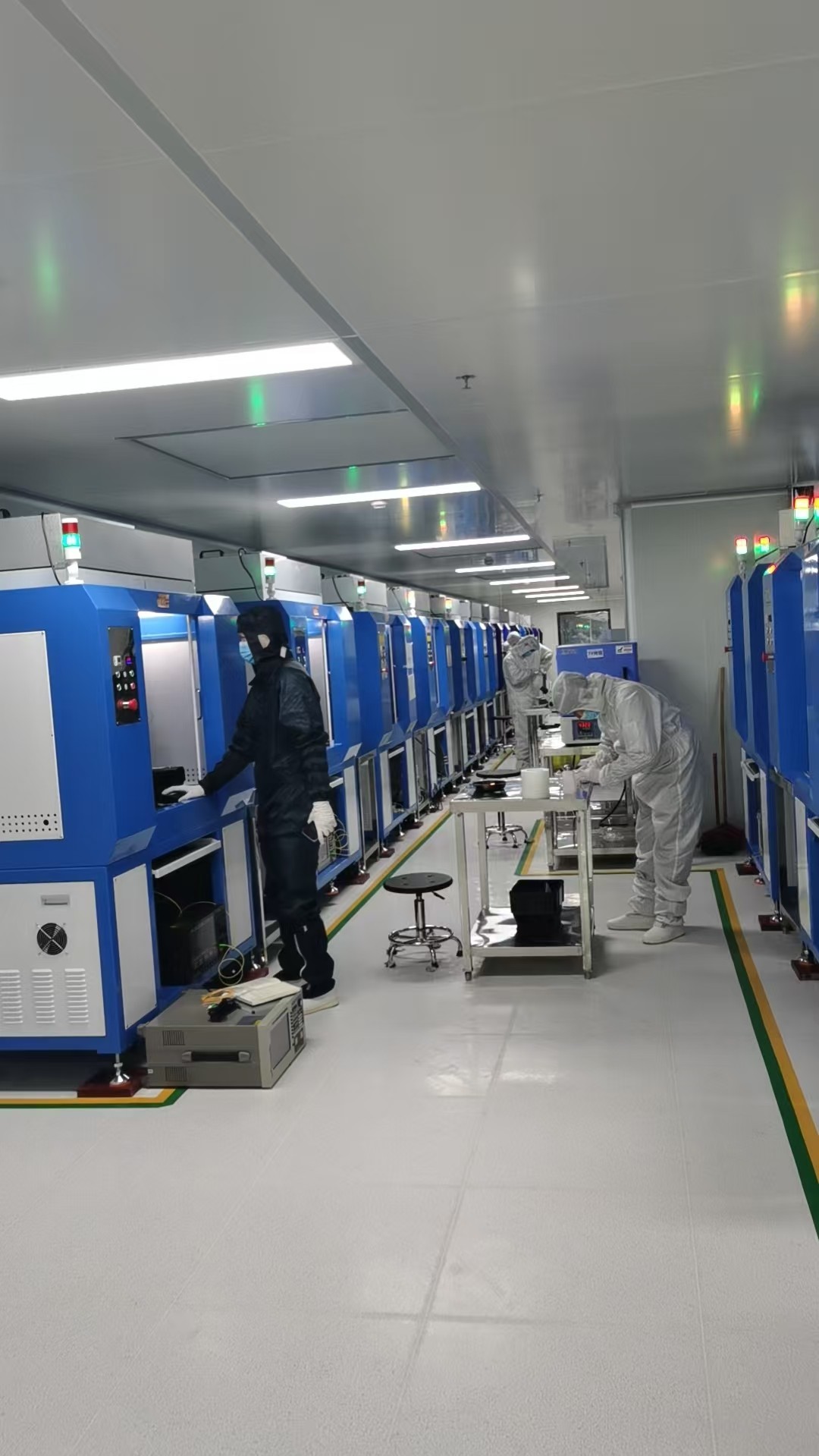
After one month of implementation and optimization, the Filter fully automated production line has been successfully put into operation, fully meeting customer requirements and achieving significant improvements in efficiency, precision, cost, and intelligence. The key outcomes are as follows:
(1) Substantial efficiency enhancement, breaking through production capacity bottlenecks
(1)Testing cycle: Reduced from manual testing at 45 seconds/pcs to 5 seconds/pcs;
(2)Daily testing volume: Single station daily testing volume increased from 1500pcs to 20000pcs, efficiency improved by 300%;
(3) Production line efficiency: Overall line capacity improved by 5 times, fully matching the customer's optical module mass production cycle, resolving the Filter testing capacity bottleneck, and supporting the customer's 800G optical module scaled mass production.
(II) Significant accuracy upgrade, reducing rework costs
(1) Test pass rate: Increased from 88.5% to 98.7%;
(2) Testing accuracy: The test deviation decreased from ≥0.05dB to ≤0.02dB, surpassing industry standards and significantly reducing the flow of defective products to subsequent processes.
(3) Rework Costs: **Annual savings exceeding 8 million yuan** in rework costs caused by failed Filter tests.
(3) Cost Reduction and Efficiency Improvement: Enhancing Profitability
(1) Labor Costs: Staffing per test line reduced from 20 to 5 personnel, cutting labor input by 75%; (2) Equipment Costs: Flexible and compatible design increases equipment reuse rate from 30% to 90%, eliminating the need for new equipment investment when adding Filter models;
(4) Intelligent Upgrade: Achieving Full-Process Traceability
(1) Data Management: Achieve real-time collection, storage, and query of test data for each Filter, with 100% accuracy, supporting full-process traceability to meet the audit and quality control requirements of downstream manufacturers;
(2) Operational Efficiency: Equipment failure rate ≤0.2%, MTBF reaches 15,000 hours, equipped with remote operation and maintenance functions, allowing engineers to troubleshoot remotely, significantly reducing maintenance costs and improving production line stability.
(V) Strategic Value Highlighted, Enhancing Industry Competitiveness
Assist customers in transforming Filter testing from "manual" to "intelligent," enhancing product quality stability and production efficiency, and consolidating their leading position in the optical module industry. At the same time, the fully automated testing mode significantly improves customer response speed, shortens product delivery cycles, strengthens customers' competitiveness in the global market, and provides strong support for expanding overseas markets.
VI. Customer Testimonials
"Harley Automation's fully automated Filter test production line has completely resolved the long-standing challenges we faced regarding efficiency, accuracy, and cost. The production line operates stably, delivers high testing precision, and boasts strong compatibility, significantly improving both Filter testing efficiency and pass rates. Moreover, it enables full-process traceability of test data, effectively supporting the mass production of our 800G and 1.6T optical modules. Harley Automation's technical expertise and delivery capabilities are truly reliable, making them a core partner for the intelligent upgrading of optical module production."
—Production Director